

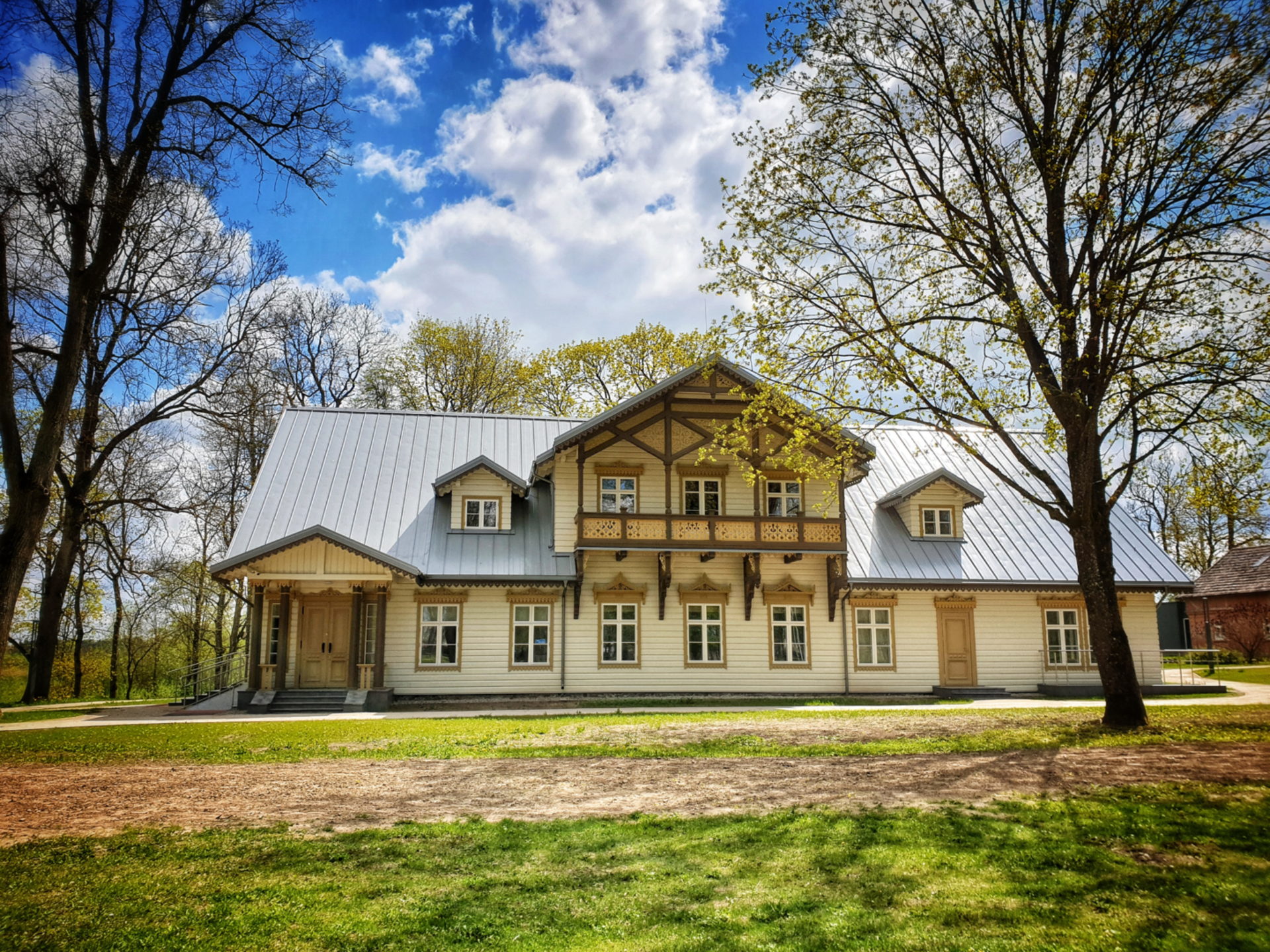
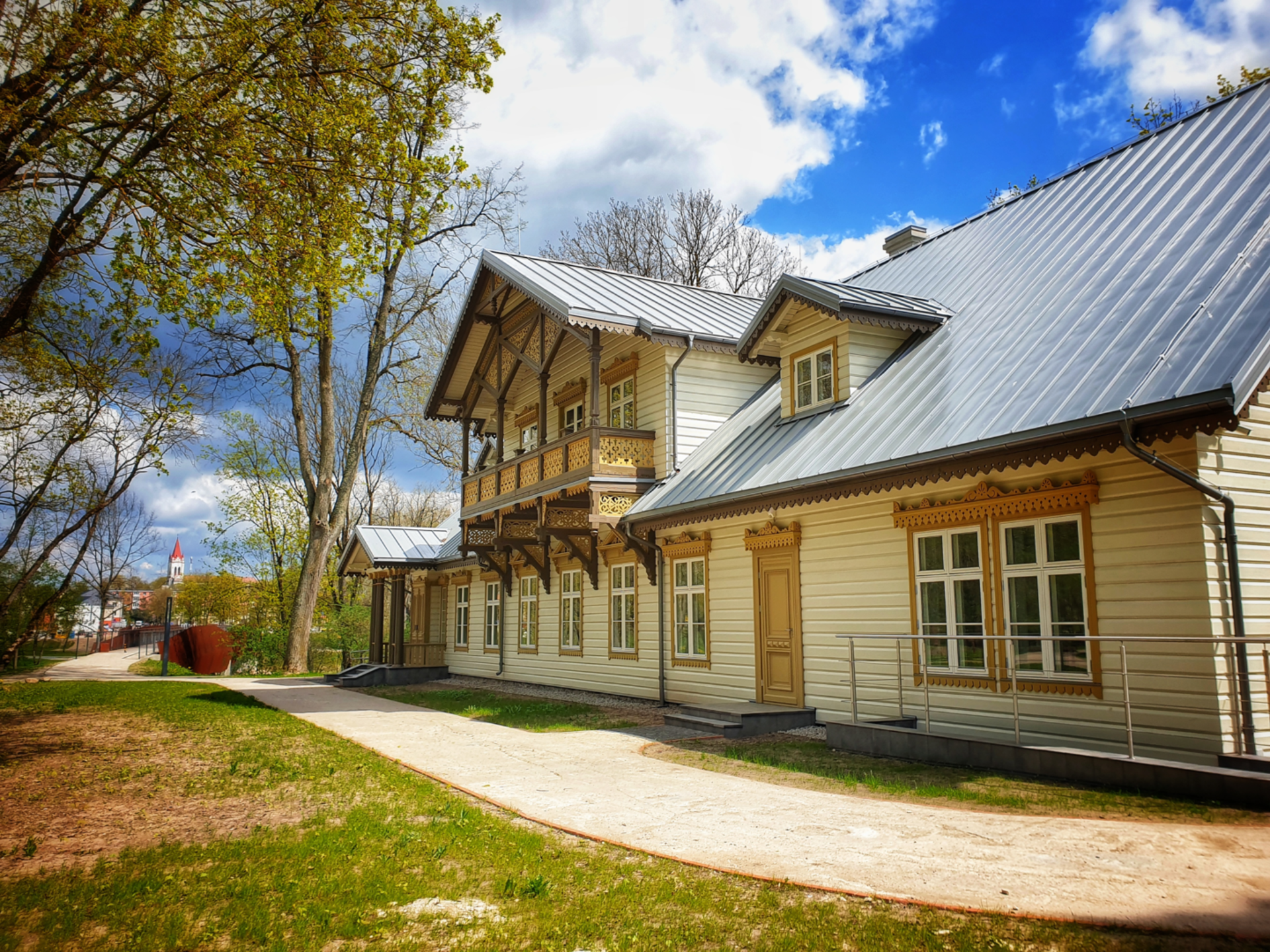
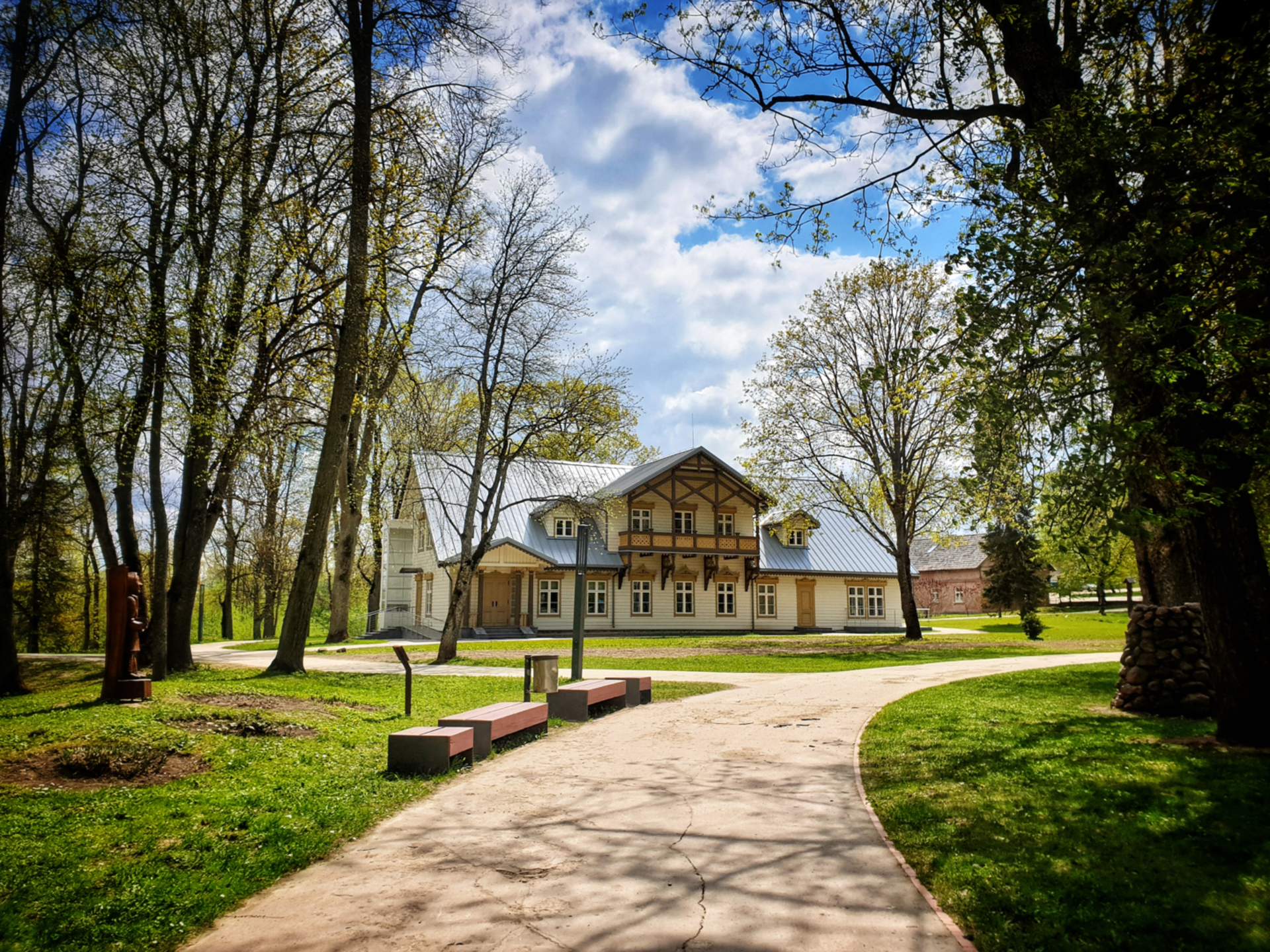
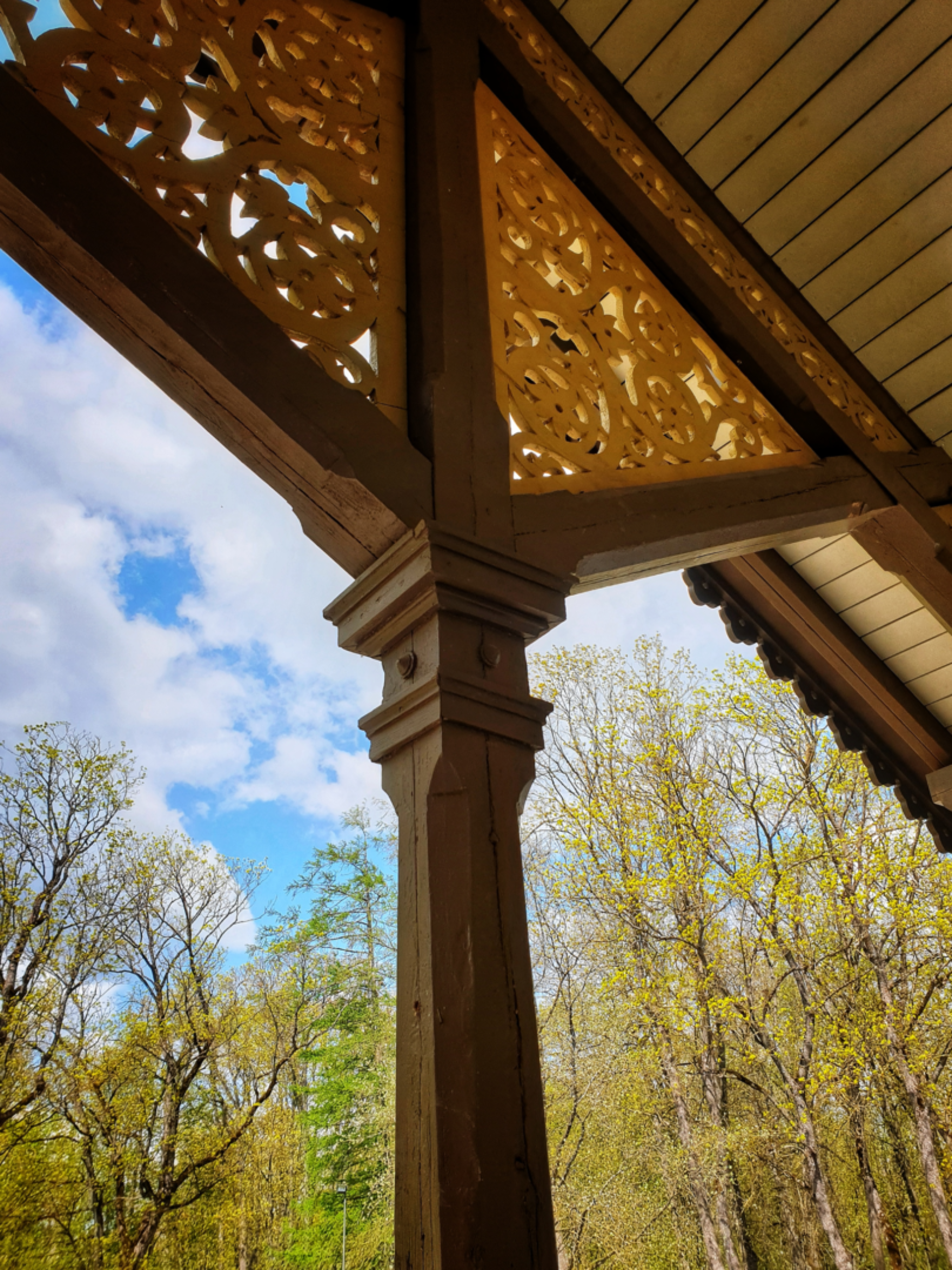
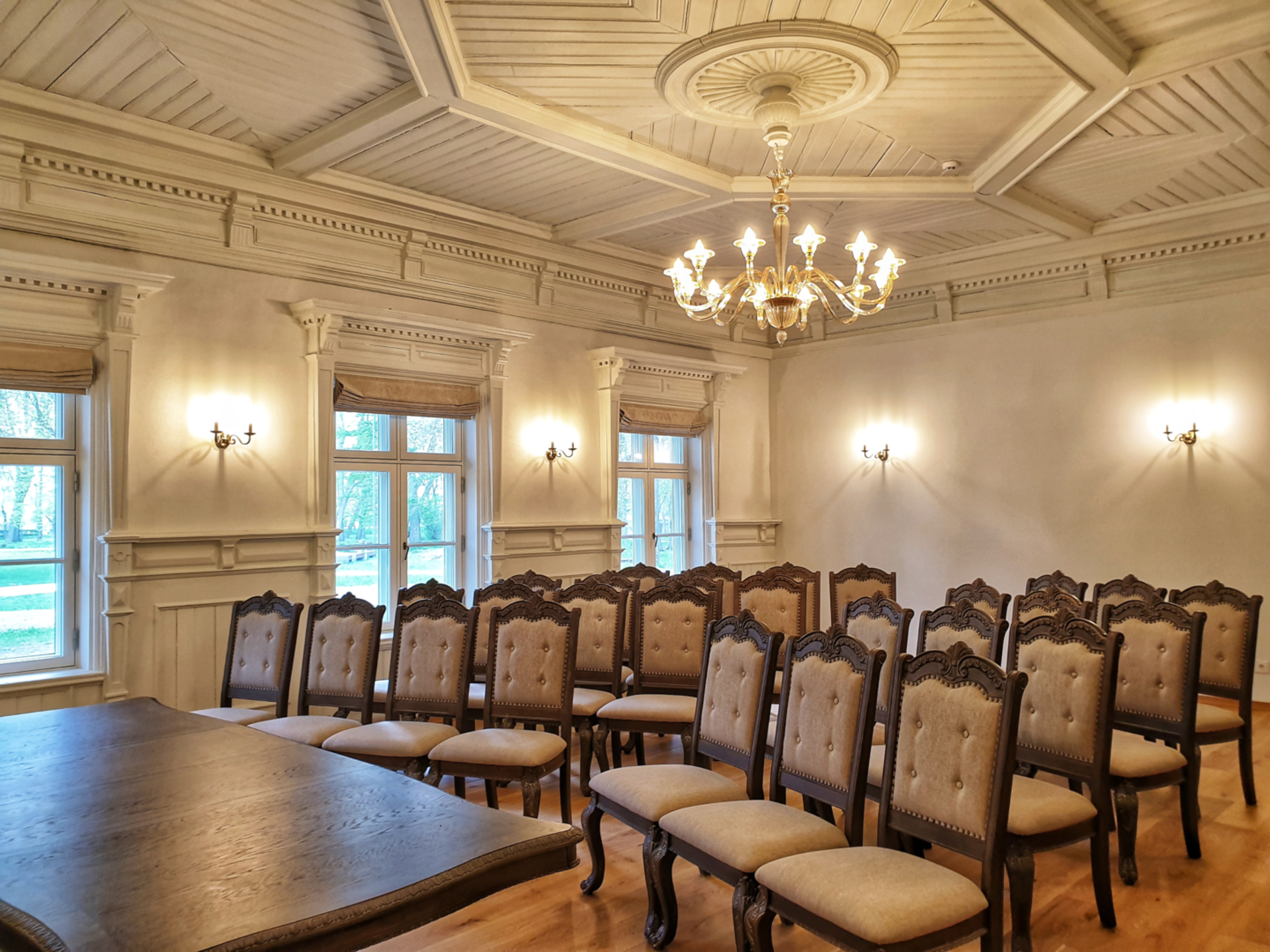
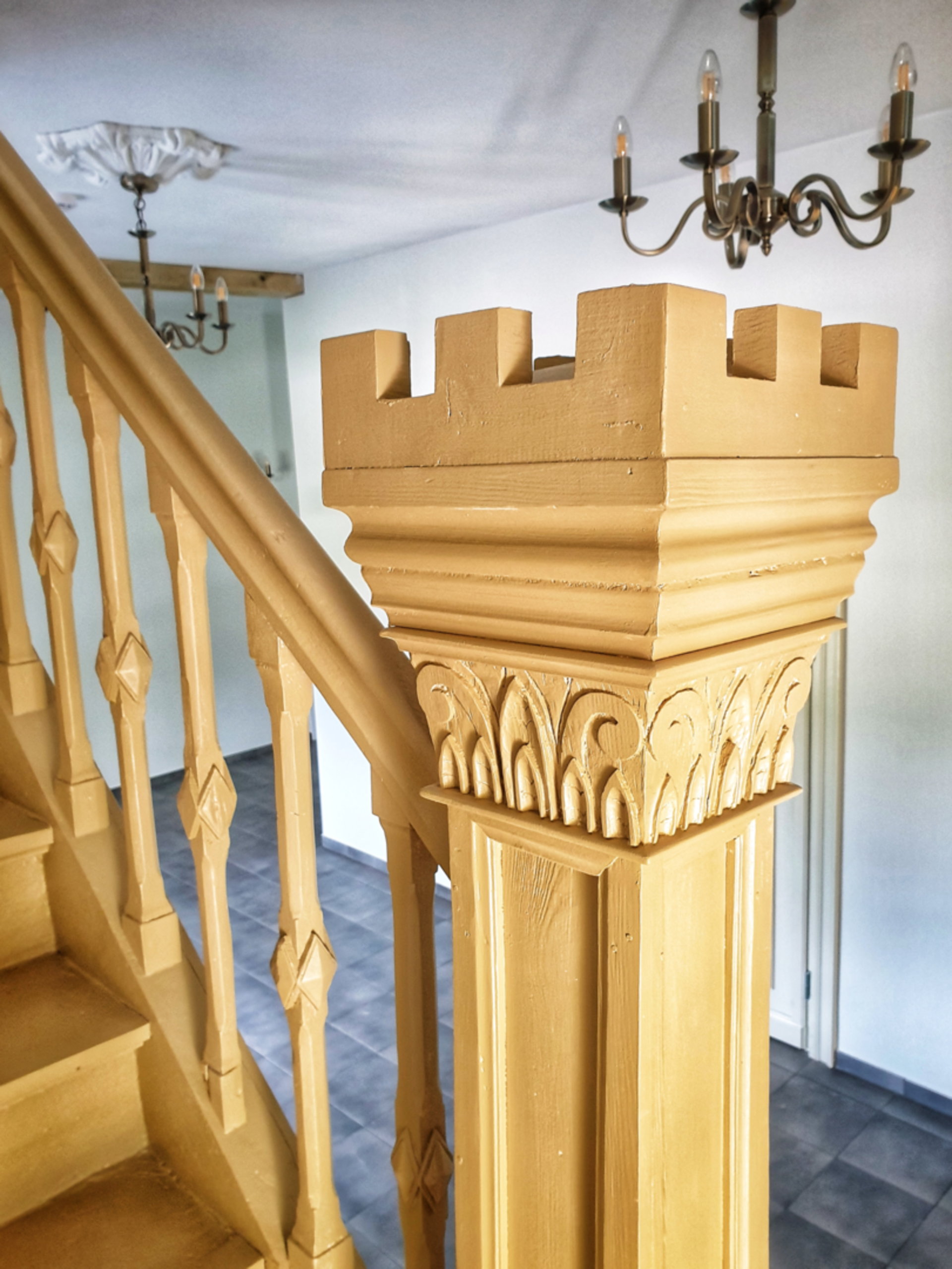
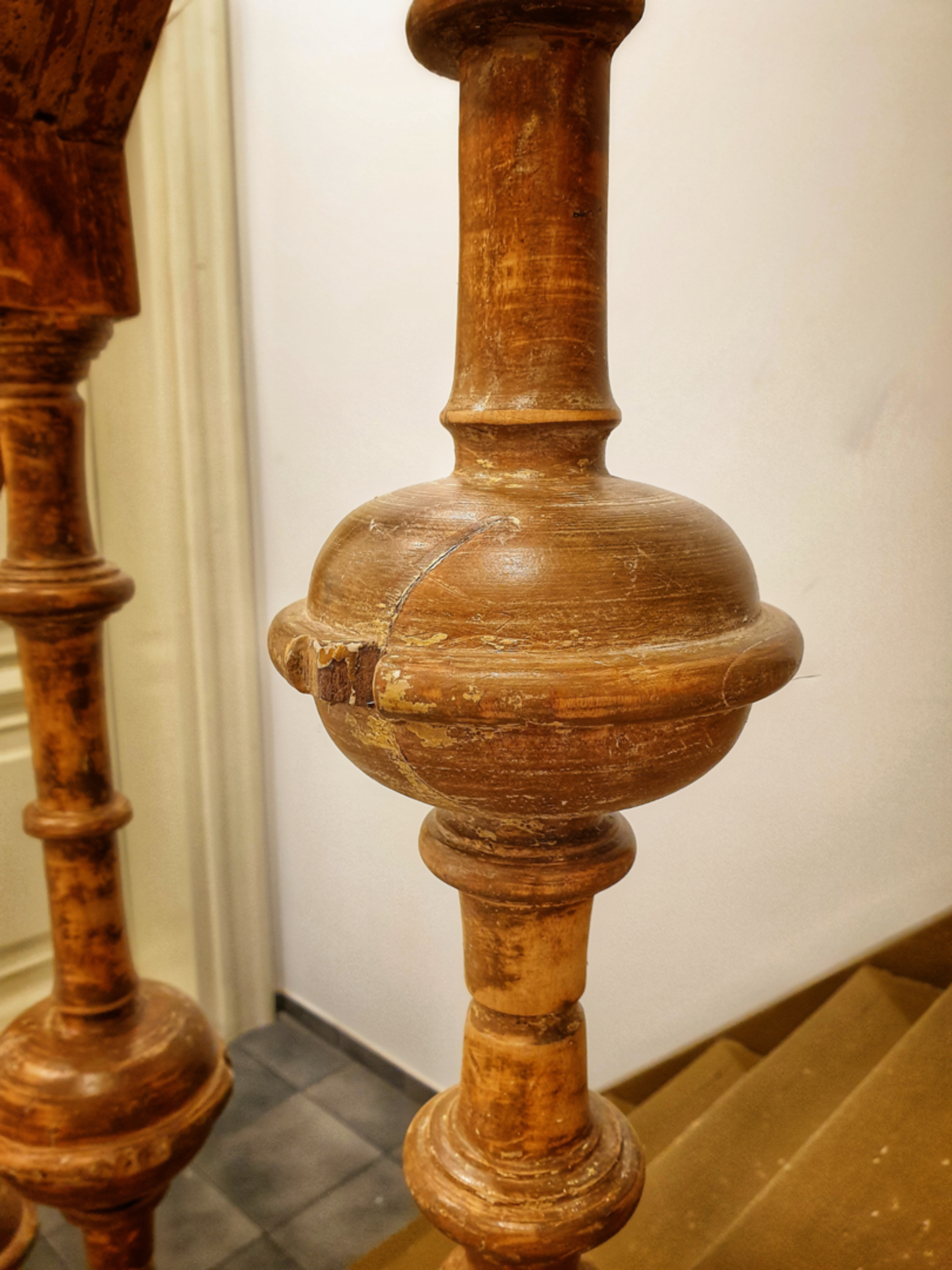
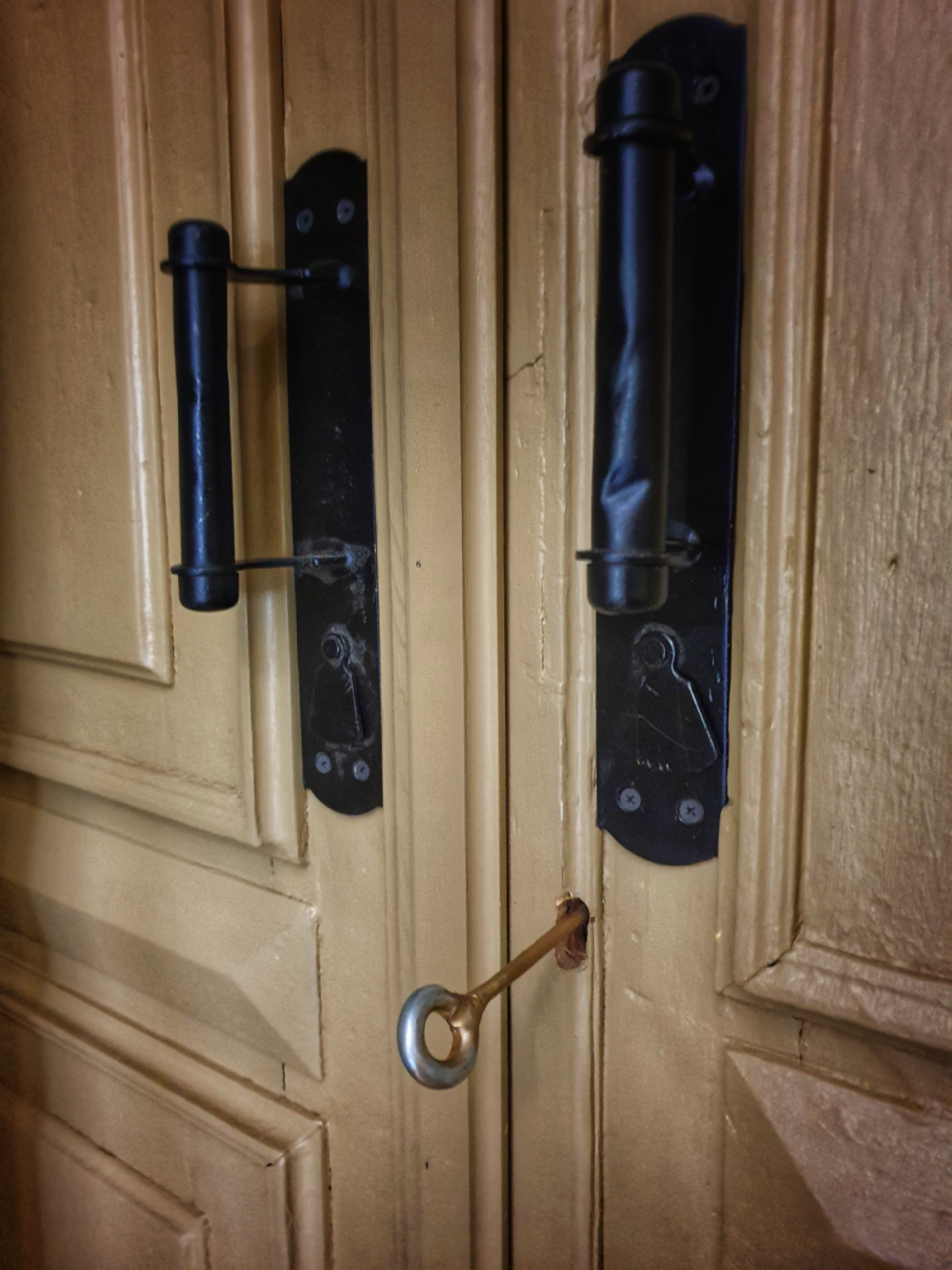
Kuršėnai Manor is the only most valuable legacy of wooden manor architecture in the Šiauliai district. Authentic stairs, window frames, and wooden front doors have survived.
The history of the Kuršėnai Manor begins in 1564, when Sigismund Augustus granted this manor to the Polotsk burgher Jurgis Despot Zinovičius with fief rights. Soon, a settlement began to grow on the lands of this manor, located on the other side of the Venta River, and in 1569 the first wooden church was built.
In 1621, the manor passed to the treasurer of the Grand Duchy of Lithuania, S. Pacus, and a decade later to Jurgis Gruževskis and his wife. At the end of the 18th century, Kuršėnai was inherited by Steponas Gruževskis. In 1811, having invited the artist J. Rilke with a whole brigade of apprentices, he built a new (current) manor house, a chapel, and renovated other buildings.
The manor flourished even more under the rule of his younger son Edward, to whom the manor passed in 1846.
During World War I, the Germans who settled in the manor devastated the park and palace, took away the most valuable items, and a fire in 1915 destroyed the barns, barns, and vegetable gardens. At that time, the manor belonged to Jurgis Gruževskis.
During the interwar period, the manor prospered thanks to advanced farming. In 1940, the manor was nationalized.
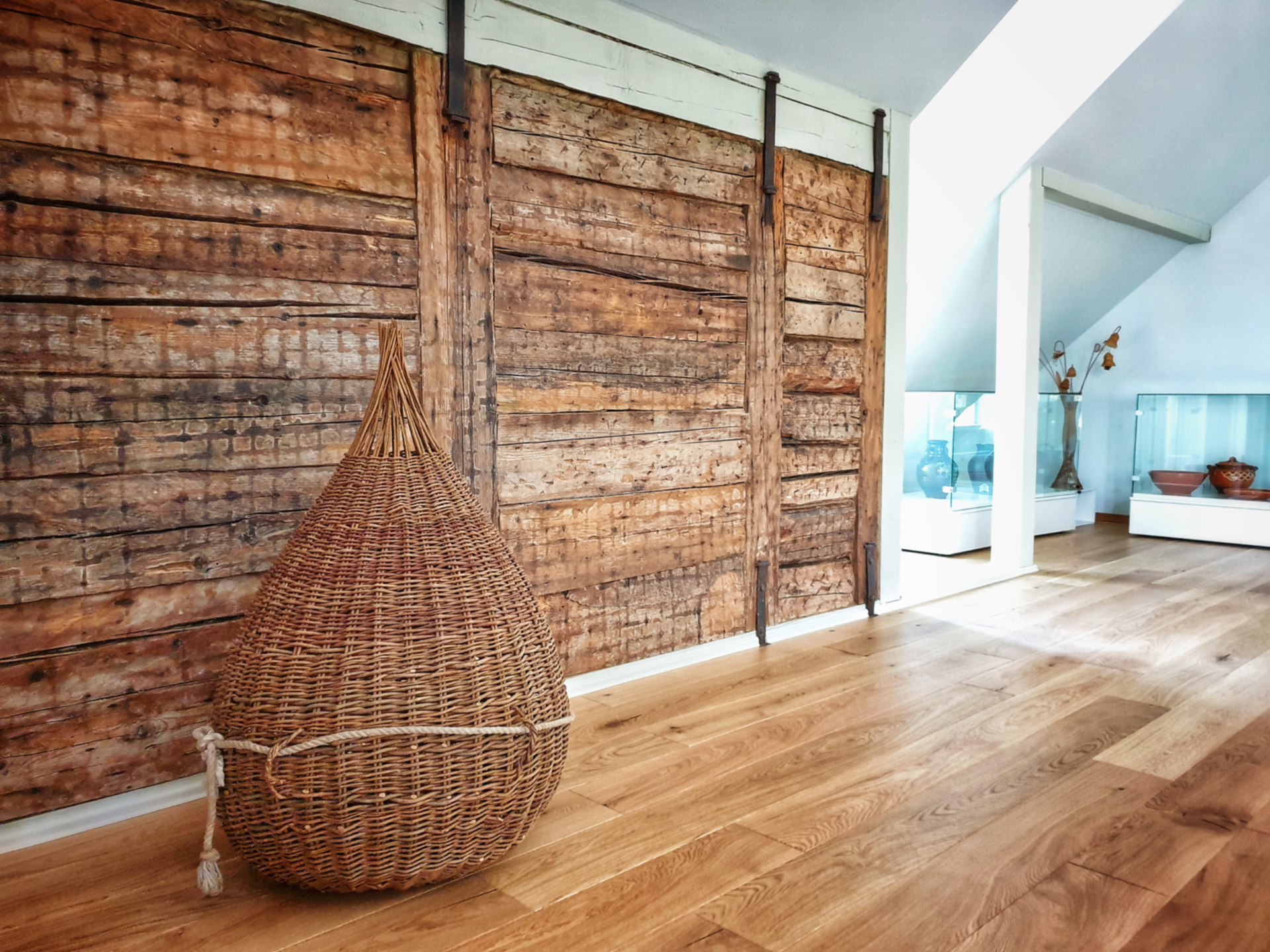
Currently, the Šiauliai District Municipality Center for Ethnic Culture and Traditional Crafts operates in the manor.
.png)
Reviews